

Airports / Alaska / AKP
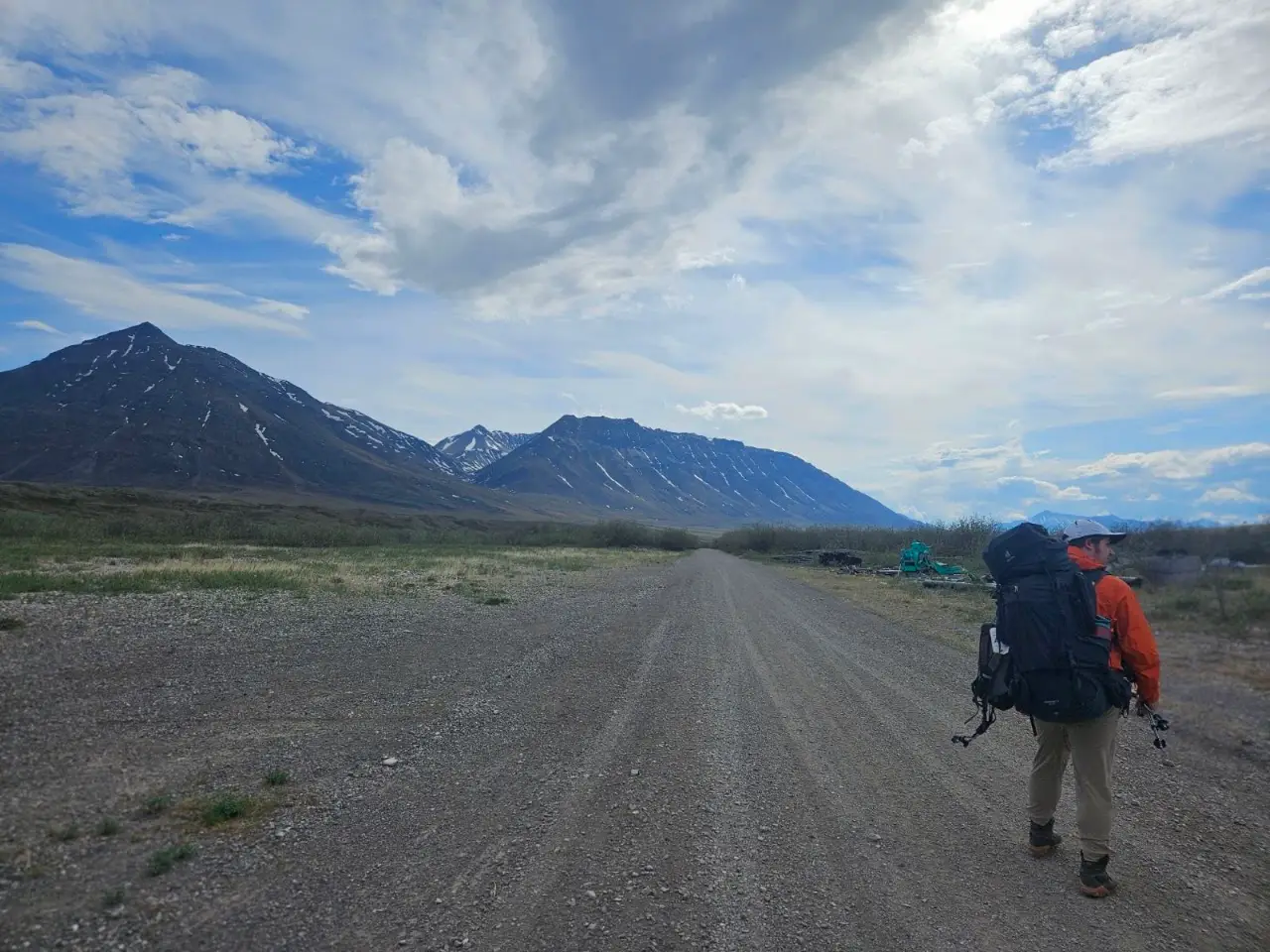
Anaktuvuk Pass Airport.
Anaktuvuk Pass, Alaska · 2,102 ft elevation. A private-aviation gateway on the Bravo register.
4.8/5
Google rating
9 ratings
0
Operators based
2,102
Elevation ft
Google rating
Google reviews
Field elevation
Nearest alternate
Field standing
#52 / 225
Alaska airports by Google rating
4.8★ across 9 Google ratings , ranked against 225 rated AK fields.
73 nm
To the nearest alternate
Bettles Airport (BTT).
Overview
Located in Anaktuvuk Pass, Alaska, Anaktuvuk Pass Airport (PAKP / AKP) operates as a mid-sized airport. Field elevation is 2,102 feet above sea level. Scheduled carriers operate here, and the field also sees regular private and charter activity.
While no charter operators list AKP as their home base, the field is reachable for repositioned charter aircraft from nearby bases. The closest alternate fields are Bettles Airport (BTT, 73 nm), Allakaket Airport (AET, 97 nm), and Nuiqsut Airport (NUI, 126 nm). The field has a single 4,800-foot unpaved runway, long enough for charter aircraft up to turboprops.
Trip costs from AKP are driven by the aircraft category flown and how far it must reposition. Browse operators flying from the area or estimate a trip cost from AKP to plan your flight.
Run an FBO at PAKP? Become the preferred FBO
Field capability
ICAO
PAKP
IATA
AKP
FAA / Local
AKP
Elevation
2,102 ft
Coordinates
68.1336° N · 151.7430° W
Airspace
G · GolfClass G, GolfUncontrolled field, no tower. Pilots self-announce and sequence themselves on the common traffic advisory frequency.Source: FAA NASR class airspace
Size
Medium
Scheduled svc
Yes
Elevation vs AK fields
state range 2–3,318 ft
At 2,102 ft, AKP sits higher than 97% of the 285 Alaska fields on the register.
Runways & aircraft access
1 runway
longest 4,800 ft
- 02/204,800 ft × 100 ftGravelUnlit
Which aircraft can operate here
vs longest runway 4,800 ft
AKP's 4,800 ft runway typically supports charter aircraft up to turboprops.
- Turboprop3,000 ft
- Light Jet3,500 ft
- Midsize Jet4,500 ft
- Super-Midsize Jet5,000 ft
- Heavy Jet5,500 ft
- VIP Airliner6,000 ft
Class minimums are sea-level planning rules of thumb. A specific aircraft's balanced-field length varies with weight, temperature, and field elevation. Confirm performance with the operator.
Access & alternates
Closest alternate fields by great-circle distance, every listing links to its own field brief.
- 73nmBTTBettles AirportBettles
- 97nmAETAllakaket AirportAllakaket
- 126nmNUINuiqsut AirportNuiqsut
- 136nmUTOIndian Mountain LRRS AirportUtopia Creek
- 138nmARCArctic Village AirportArctic Village
- 139nmHUSHughes AirportHughes
Location
Open the full mapPAKP · Anaktuvuk Pass Airport · Anaktuvuk Pass, AK
Flight times from here
Approximate nonstop block times from AKP on a typical midsize charter jet. Faster classes trim these; add positioning and taxi for the real schedule.
| Destination | Distance | Block time |
|---|---|---|
| Anchorage (ANC) | 420 nm | 1h 23m |
| Seattle (SEA) | 1,528 nm | 3h 57m |
| Jackson Hole (JAC) | 1,950 nm | 4h 56m |
| San Francisco (SFO) | 2,075 nm | 5h 14m |
| Salt Lake City (SLC) | 2,078 nm | 5h 14m |
| Vail / Eagle (EGE) | 2,239 nm | 5h 36m |
| Aspen (ASE) | 2,263 nm | 5h 40m |
| Denver (DEN) | 2,273 nm | 5h 41m |
Common questions
- What size private jets can use AKP?
- Anaktuvuk Pass Airport's longest runway is 4,800 ft, which typically supports charter aircraft up to turboprops. Lighter classes (turboprops, light and midsize jets) operate comfortably; confirm exact performance for a specific tail with the operator, since balanced-field length shifts with weight, temperature, and elevation.
- What is the longest runway at AKP?
- Anaktuvuk Pass Airport has one runway; the longest measures 4,800 ft.
- What is the nearest major airport to AKP?
- The closest alternate is Bettles Airport (BTT), about 73 nm away, followed by Allakaket Airport (AET) at 97 nm. Operators often position aircraft between these fields depending on ramp space and availability.
- How long is a flight from AKP to major cities?
- Typical block times on a midsize jet: Anchorage about 1h 23m (420 nm), Seattle about 3h 57m (1,528 nm), Jackson Hole about 4h 56m (1,950 nm). Faster classes trim these times; add positioning and taxi for the real schedule.