


Can You Stream on a Private Jet? Wi-Fi, Speeds, and What to Expect
Cabin Wi-Fi on private jets varies wildly. Here is what actually works at 45,000 feet, from email to 4K streaming, and what to ask before you book.
Bravo Editorial Team/September 21, 2026/Updated September 24, 2026/4 min read
You are 43,000 feet over Kansas, halfway through a four-hour flight, and you want to join a Zoom call, stream a show, or at least send an email with an attachment. Whether that works depends entirely on the Wi-Fi system installed on the aircraft. The gap between the best and worst in-flight connectivity is enormous.
The Four Generations of Private Jet Wi-Fi
Not all airborne internet is created equal. The technology installed on the aircraft determines your ceiling, and many charter jets are still running older systems.
Air-to-Ground (ATG)
The oldest broadband system still in service. ATG uses cellular towers on the ground to beam a signal up to the aircraft. Coverage is US-only (no ocean, no international), speeds top out around 3-5 Mbps shared across all passengers, and the connection drops over water, mountains, and rural gaps.
What works on ATG: email, messaging apps, basic web browsing, low-resolution video calls (with some buffering).
What does not work well: HD streaming, large file uploads, multi-user video conferencing.
Gogo AVANCE (L3 / L5)
Gogo's current product line for business aviation. AVANCE L3 uses ATG with improved antennas and speeds in the 5-10 Mbps range. AVANCE L5 adds a satellite link for over-water coverage and better throughput.
The L5 system is a meaningful upgrade. It can handle a video call and email simultaneously for a small cabin. But it is still not a home broadband replacement.
Satellite Ku-Band
Ku-band satellite systems (like those from Honeywell JetWave or older ViaSat installations) offer broader coverage including oceanic routes. Speeds range from 5-20 Mbps depending on the provider, the satellite constellation, and how many other aircraft are sharing the beam.
What works: video conferencing, standard-definition streaming, file downloads, multi-device browsing.
What struggles: 4K streaming, large cloud syncs, anything that demands consistent low latency.
Ka-Band and Next-Generation Satellite
This is where things get interesting. Viasat Ka-band and SES mPOWER systems deliver speeds that can exceed 25 Mbps and in some cases approach 50+ Mbps. These are the systems installed on the newest heavy and ultra-long-range jets.
The Bombardier Global 7500 and the Gulfstream G700 typically come equipped with Ka-band satellite connectivity that supports real HD streaming, multi-device usage, and reliable video conferencing.
Starlink Aviation is the emerging wild card. SpaceX's low-earth-orbit constellation promises residential-grade speeds (50-200+ Mbps) at altitude. Some charter operators have begun installing Starlink on their fleets, but coverage is still expanding and not every operator offers it.
What Actually Works at Altitude
Here is a realistic breakdown by activity:
| Activity | ATG | Ku-Band | Ka-Band / Starlink |
|---|---|---|---|
| Email and messaging | Works well | Works well | Works well |
| Web browsing | Moderate | Good | Excellent |
| Video calls (Zoom, Teams) | Choppy | Usable | Smooth |
| Music streaming (Spotify) | Works | Works | Works |
| SD video streaming | Buffering | Usable | Good |
| HD video streaming | No | Sometimes | Yes |
| 4K streaming | No | No | Sometimes |
| Large file uploads | Slow | Moderate | Good |
The key variable is not just the system but the number of people sharing the connection. A family of four all streaming different shows will strain even a Ka-band system.
Light Jets vs. Heavy Jets
There is a strong correlation between aircraft size and connectivity quality.
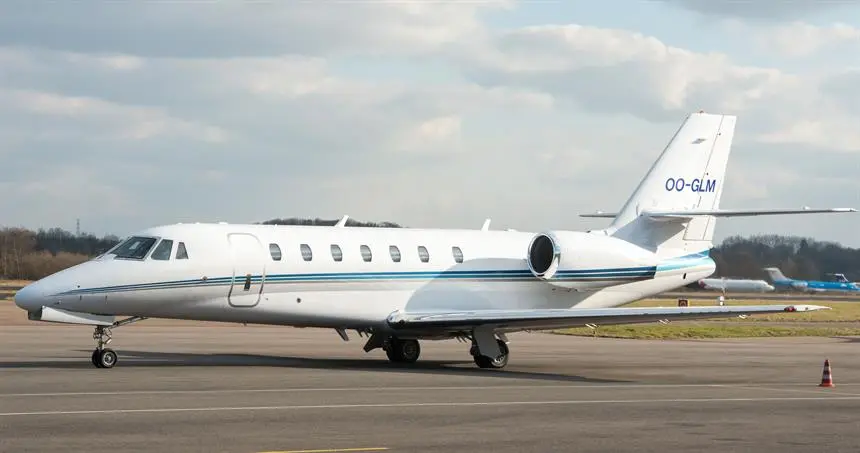
Light jets (Citation CJ3, Phenom 300, Learjet 75) are hit or miss. Many have ATG or no Wi-Fi at all. Some newer light jets have been retrofitted with satellite systems, but it is not standard. If connectivity matters for your trip, ask specifically.
Midsize and super-midsize jets (Challenger 300, Citation Latitude, Hawker 4000) vary widely. Some have been upgraded to Gogo AVANCE or Ku-band satellite. Others are still running legacy ATG.
Heavy and ultra-long-range jets (Global Express, Gulfstream G550, Global 7500) almost universally have satellite connectivity, often Ka-band. These are the aircraft where you can reasonably expect to work, stream, and video call throughout the flight.
What to Ask Your Operator Before Booking
If in-flight connectivity matters for your trip, do not assume. Ask these specific questions:
- What Wi-Fi system is installed on the specific tail number assigned to my flight?
- Is it satellite-based or air-to-ground?
- What is the expected bandwidth?
- Does the system work over water (relevant for Caribbean, transatlantic, or coastal routes)?
- Is there an additional charge for Wi-Fi usage?
- Has the system been tested recently?
A good operator will answer all of these without hesitation. If they cannot tell you what system is on the aircraft, that tells you something about their operation.
The Honest Answer
Can you stream on a private jet? It depends. On a Global 7500 with Ka-band or Starlink, you can stream Netflix in HD, take a Zoom call, and browse the web simultaneously. On a 15-year-old light jet with legacy ATG, you might struggle to send an email with a PDF attachment.
“The best connectivity in private aviation today rivals home broadband. The worst is barely functional. The difference is the aircraft and the system installed on it.”
The industry is improving rapidly. Starlink is pushing operators to upgrade. Within a few years, poor in-flight Wi-Fi will be the exception rather than the norm. But today, if connectivity is critical to your trip, ask before you book, get the specific system name, and set your expectations accordingly.
For operators with modern fleets and verified reviews from fliers who have tested the connectivity firsthand, start on Bravo's directory.
Keep reading
All posts → The Experience
How Fine Art Travels by Private Jet
Why collectors move masterpieces by private jet: the climate control, security, customs, and chain-of-custody that make a chartered aircraft the safest way to fly fine art.
5 min read
 The Experience
Flying With Pets on a Private Jet: The Complete Guide
On a private jet your pet rides in the cabin with you, not in a cargo hold. Here's what operators require, what it costs, and where owners get burned.
4 min read
 Costs & Pricing
Jet Card Comparison: Side-by-Side Programs for 2026
A side-by-side comparison of major jet card programs including NetJets, Flexjet, Sentient, flyExclusive, Jet Linx, and more. What matters and what to watch for.
9 min read
Ready when you are
Compare rated operators on your route
One request, multiple itemized quotes from audited Part 135 operators, with reviews and safety ratings beside every name.